

Research at Linköping university
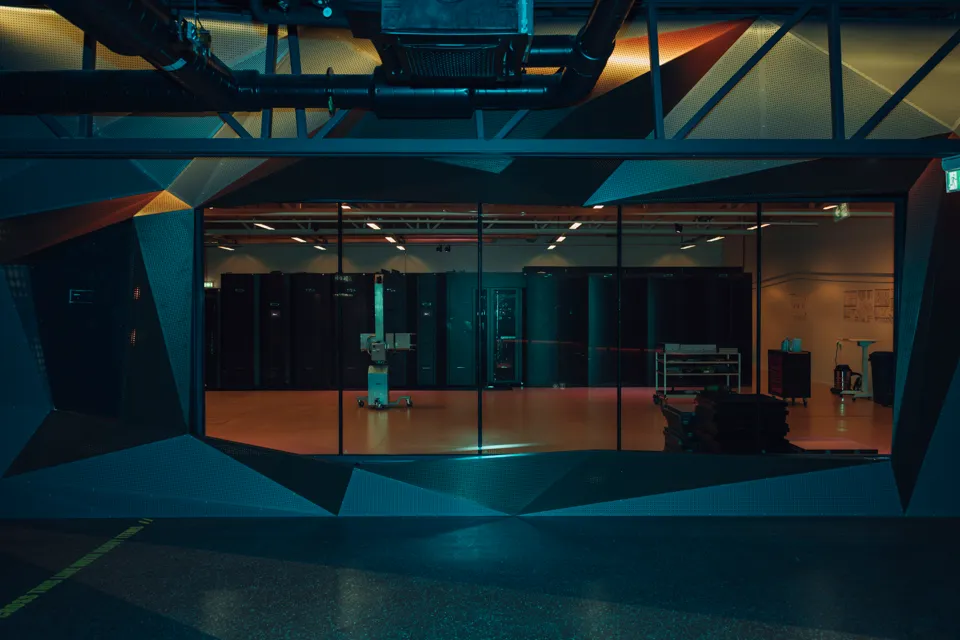
Linköping University is a national leader in digital technologies, combining strong interdisciplinary research with close collaboration across industry and the public sector. The university excels in areas such as AI, machine learning, autonomous systems, cybersecurity, and data-driven innovation, supported by leading environments like WASP, WISE and AI Sweden.
With expertise spanning software, hardware, embedded systems, and human–computer interaction, LiU delivers cutting- edge research that is rapidly translated into real-world applications. Strong ties to key industries – including aerospace, manufacturing, and health tech – together with advanced labs, testbeds, and a dynamic innovation ecosystem, position the university as a driving force in digital transformation.
Education
Linköping University has about 45,000 students across four campuses, including ca 20 000 distance and off-site learners. The university offers 135 degree programs – 32 of which are international – and about 700 standalone courses. With exchange agreements with 400 universities in 50 countries, LiU hosts around 1,700 international students annually and awards about 2,600 bachelor’s and 3,100 master’s degrees each year.
Linköping University is the only university in Sweden to offer an English taught civil engineering programme with an international profile and inbuilt studies abroad. Since many years Linköping University ranks number one in Sweden on both having the highest percentage of students successfully entering the job market upon graduation and doing it quickly.
Research and doctoral education
The university has 364 professors and 1,300 doctoral students. On average, 28 licentiates and 161 PhDs graduate each year, reflecting the strong research environment and active doctoral training.
Departments relevant to Digital Technologies
Department of Physics, Chemistry and Biology (IFM)
- advanced research in new materials, semiconductor technology, and nanotechnology.
Department of Computer and Information Science (IDA)
- leading research and education in AI, machine learning, programming, data analytics, and cybersecurity.
Department of Science and Technology (ITN)
- strong in visualization, simulation, media technology, and integrated electronic systems.
Department of Electrical Engineering (ISY)
- expertise in control engineering, communication systems, vehicle automation, signal processing, and electronics.
Division of Information Systems and Digitalization (IEI)
- focusing on digital transformation and IT support in organizations.
Senast uppdaterad