

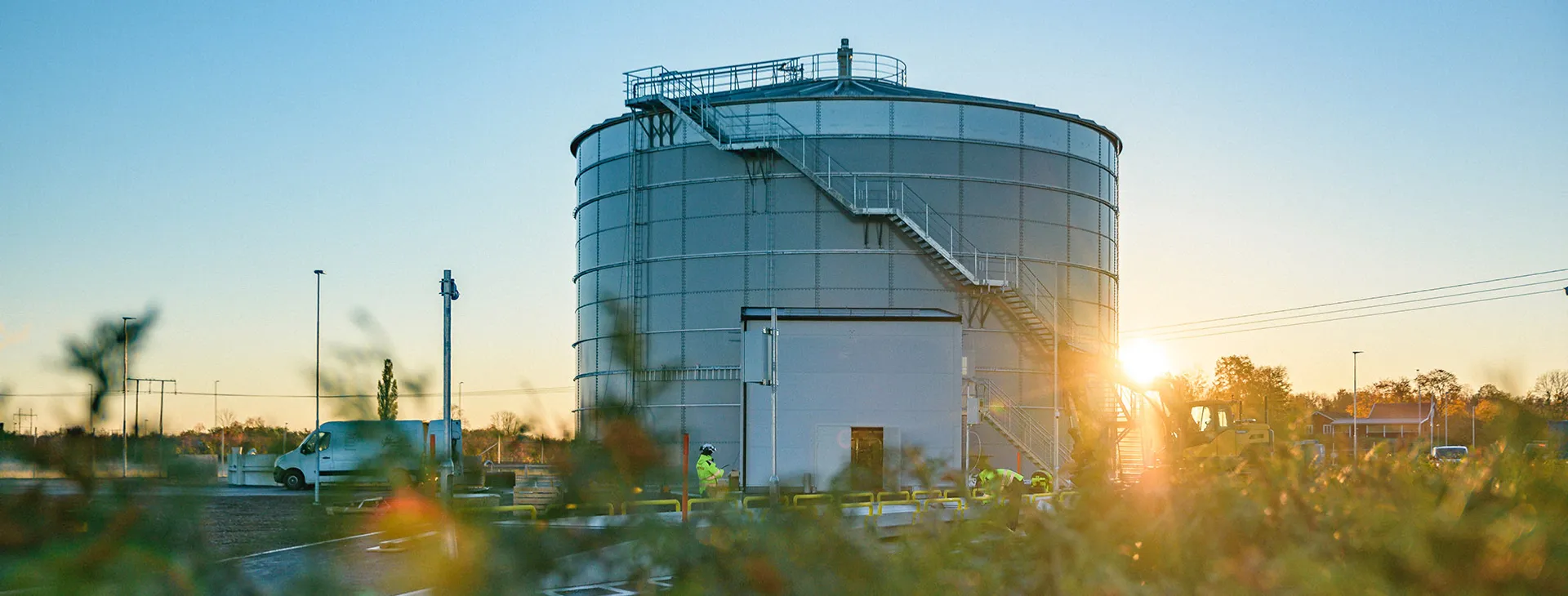
Proven research excellence
Linköping University (LiU) plays a key role with cutting-edge expertise in energy systems, semiconductors, biogas, batteries, and sustainable materials — for example, through the Biogas Solutions Research Center and the Energy Conversion and Energy Storage Laboratory.
This film presents the symbiosis at Händelö Eco Industrial ParkExternal link. External link. outside Norrköping where residual heat from E.ON is used to produce ethanol at the facility of Lantmännen Biorefineries.
Industrial and urban symbiosis involves companies collaborating to utilize each other's resources, such as waste, excess materials or energy, which reduces environmental impact through decreased waste and more efficient resource use. This leads to lower energy consumption and reduced greenhouse gas emissions. Economically, it is advantageous because it can lower costs for raw materials and waste management or energy use, while also creating new business opportunities and strengthening companies' competitiveness. A by-product from, for example, an industry can also serve as a basis for establishing new operations, such as utilizing biogenic carbon dioxide or residual heat
Industry at scale
The region hosts an ecosystem of companies such as Siemens
Energy, Tekniska Verken, Swegan, Ligna Energy, and Epishine, which provide important contributions across several different value chains.
The biogas sector and the industrial symbiosis at Händelö demonstrate how resource-efficient technology creates new energy products. In organic electronics, flexible, bio-based energy solutions are being developed.
Innovation that reduces risk
A well- developed innovation support system strengthens entrepreneurship and growth.
Senast uppdaterad